Showing posts with label Essay. Show all posts

Saturday, August 29, 2020

Postal Service Reform is Necessary .... Sometime


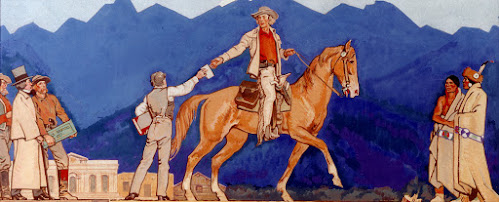
It’s well past due for this country to reform the US Postal Service. A postal service is required in the U.S. Constitution, which says, “The Congress shall have the power] to establish Post Offices and Post Roads.” Article 1, Sec.8. But Benjamin Franklin, our first Postmaster General had established post offices before the Constitution was adopted. Nothing appears in the Constitution suggesting the Postal Service must be self-sustaining. Since the earliest days of our republic, news and information has been delivered to homes and post offices. As we spread west, postage was delivered by Pony Express, Well Fargo station wagons, and RFD (rural free delivery established in the 19th century) to postal boxes at the end of lanes heading up driveways to farms, homes, and estates. 
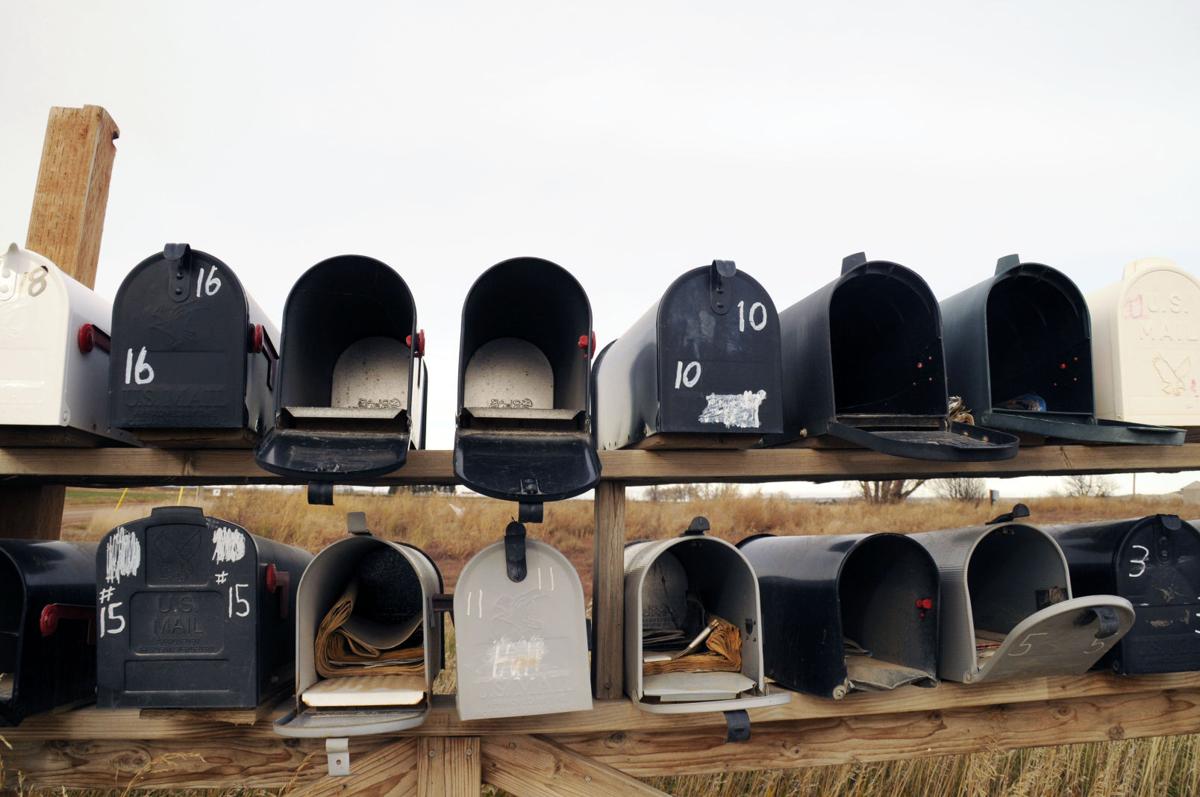


Meanwhile, post offices, large and small, were established in such a way that every Member of Congress maintained a vested interest in keeping employees and services at work in order to service voters throughout their districts. This has come to mean that every elected official has an interest in keeping the Postal Service, post offices, and postal employees. They constitute a working crowd now consisting of over 600,000 employees and costing $71 billion dollars, serving every home and office in the country. These people and the institutions all affect people who vote. The Postal Service has long been in need of a major overhaul, but not this way and not now!


President Trump has chosen to make massive changes, with no particular plan in mind, let alone on paper, describing what his goals are or how he wishes to achieve them. Rather than undertake the legislative process necessary to make rational and needed changes or to prepare the population for them, he has staked his possible (but not likely) re-election on disrupting the postal delivery service by sabotage and fiat rather than by negotiation and compromise, which might take years to achieve. He has sown distrust in a system which most Americans have trusted, used, and revered. 


The biggest change affecting how we receive and exchange information, goods,  services, as well as money is the advent of the digital information age and widespread use of the Internet. The Covid-19 Pandemic has not only accelerated the urgent need for rethinking our communications and delivery systems, but forced many Americans to rely ever more completely on some sort of integration between old-fashioned mail, and ubiquitous electronic communication. But, sadly, those able to avail themselves of widespread electronic and postal services are only those who live in areas dense enough to have provided nearly universal services or who are wealthy enough to assure their becoming a fully integral part of our daily lives.


Banking, bill paying, investing, Christmas cards and birthday cards, personal and business correspondence, advertising, and a plethora of other communications which once arrived by mail now come to us through a variety of digital devices, each of which is built into one or another digital device which have now become ubiquitous, but certainly not universal. Until electronic services are as available to nearly everyone today as postal service was by the end of the nineteenth century and electricity by the mid-twentieth century, major changes in the US Postal Service will remain impossible. 


Families living without access by cable or, at least, cell-tower still cannot access the internet. However, as of 2019, according to a Pew Research Center report, that percentage had only reached 85% in rural areas.
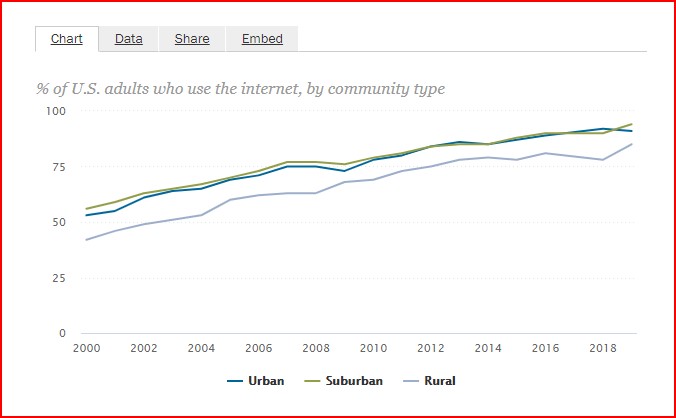


Until we can provide, at a reasonable cost, nearly 100% availability to the Internet in America’s rural areas, we cannot undertake extensive overhaul of the U.S. Postal Service. Even if in large parts of the country there will be redundant availability of access to computers and supplies to those needing to use them as an adjunct to schooling, the Postal Service can be fully accomplished. Now, just before a hotly contested election in the midst of a pandemic when the country is more divided than ever surely cannot be the right time to begin work on accomplishing this enormous and enormously expensive national goal. 
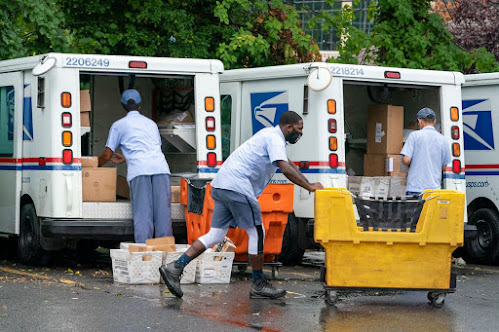


While the USPS is no longer the source of innumerable patronage jobs for members of Congress to dispense to constituents, there are still post offices in all but the smallest hamlets in the nation. Taking those small village post offices, which function to deliver the mail as well as being a place where neighbors cross paths on a regular basis, would become contentious for those running for office. Eliminating this widespread source of jobs and information could make the thorough re-imagination of distribution and reduction in size of the Postal Service costly to any politician.


Nevertheless, the ways we distribute goods and services, information, and entertainment have changed substantially in the last three decades or so. Changes in the scope and mission of the USPS in the face of these changes are inevitable and important. At the very least, such changes deserve thoughtful, considered decision-making and a full-fledged administrative and legislative cooperation. All this argues strongly against the immediate and politically oriented reduction to postal delivery we currently face. Finally, saving the postal system and integrating it properly will require striving for a level of consensus not currently existing in the country. It’s time to put such major changes on hold until more light and less heat is shed upon the many serious problems we face. 


Thursday, November 5, 2015

Some Thoughts on Publicity: Facebook & Radio - Essay


A week or so ago I posted a video on my YouTube channel of the Lonesome River Band singing a song called Bonnie Brown at the Dumplin Valley Bluegrass Festival in Tennessee back in early October. Two days later I posted an instrumental video by another very popular performer. A week later I noticed that the LRB song had been viewed over 550 times while the succeeding video only had 114 hits. I asked myself, “What could have happened to boost the LRB song so high, so fast?” As I dug around, I found that my video had been posted on LRB's Facebook page as well as in their Twitter feed and their publicist's Twitter page. This incident has encouraged me to try to put some elements together about how musicians use the potential of publicity to build and develop their careers, and the effect of social and electronic media on them.

The era of social media has evolved such that it requires a new set of skills for people functioning in the public to learn and master. Entertainers, at every level of the music industry find themselves competing for attention with a bewildering range and number of possibilities for the public's scarce entertainment dollar. Meanwhile, these new technologies have derailed traditional means of gaining the attention of fans and encouraging them to allocate resources in the desired direction. Changes in the recording and music distribution industry are huge. Techniques for garnering and effectively exploiting attention are bewildering and continuing to change. The balance of traditional streams of income (sales of recordings, performance, merchandise, film, television, and so-on) has been upset by streaming audio and now video, changes in how royalties are distributed, and a continually changing entertainment environment. One thing is certain for bluegrass musicians...it's not all about the music.


Several years ago, when Facebook was roughly half the size it is now, and those of us who are of “a certain age” were still new to the world it opened to us, I noticed that the Gibson Brothers had little or no presence on that platform, which was becoming important to me. I wrote to Eric about it, and he virtually told me to mind my own business. However, characteristically, he thought about what had been said, apologized, and then, based on his own analysis of the possibilities, started to become active as a personality on Facebook. Eric Gibson is, generally speaking, a private person functioning in a very public setting. He also thinks deeply about what affects the fortunes of the Gibson Brothers band and helps them progress. He proceeded to become a master at using Facebook to make himself available to the band's fans.

Eric, on his Facebook page, observes the world around him and writes about his interests: family, music, baseball, and nature, among other things. He soon noticed that he needed to strike a balance between posts about the progress of the Gibson Brothers, the pleasure he finds in sports, his love of hard work and the outdoors, and the need to provide privacy for his family, and himself, as well disclosing those elements that would be of genuine interest to others. In so doing, he helped build the band through the authenticity of his posts, without being unnecessarily self-disclosing where to do so might compromise the privacy he so values. Eventually, the struggle his son Kelley has been having with autism emerged, because Kelley wished to share it. That part of the story is ongoing.

What Eric has accomplished is a neat trick. I see many bands who post about where their next performance will be or that they've added a musician, or that so-and-so has left (always for personal reasons) but that all is fine and everyone is happy. Such materials almost always either bore people, or is so patently false it fools no one. Perhaps part of the problem lies in allowing publicists or record labels to manage Facebook pages, because the artists don't like the task or think it's not central to their effort. Facebook is a uniquely personal platform requiring the individual to manage how he or she is presented. It's important to learn to be a character in your own story while still getting out the crucial information at the right time. Although I haven't studied her Facebook page, or her music, I gather that Taylor Swift is the very best entertainer using Facebook to help herself. Facebook itself just announced its monthly user-ship as exceeding1.5 billion. Even your own little corner has enormous potential for effective publicity, and it takes only a little time each day to cultivate. Remember Eric Gibson's post about seeing an albino squirrel.


I don't know how many people broadcast bluegrass music on terrestrial, Internet, or satellite radio or how many people listen to their bluegrass music in this way. The range is huge, though. Small college radio stations often have several hours a week devoted to bluegrass broadcasts hosted mostly by volunteer broadcasters. Small market AM and FM stations still exist, and their reach has been widened by the ease of access to Internet streaming and its relatively low cost. (For an interesting overview of this area check out the Prometheus Radio Project) Sirius/Xm radio holds its data and ratings very close to the vest, but its importance, at least in bluegrass, appears to be huge. The future and strength of the platform, however, may ride on whether Howard Stern renews his contract next month. Here's a recently published article exploring sirius/xm in the new Internet environment that includes Spotify, Pandora, Apple radio, and other streaming services.

Musicians can only benefit by appearing as guests on these radio programs. But merely appearing isn't enough. They need to do several things to increase the effectiveness of their appearances. Particularly in the case of terrestrial radio, they need to inform themselves about bluegrass broadcasters who can be heard within a reasonable travel range of local radio stations near where they're appearing. Having done this, musicians must reach out in timely fashion to these people to arrange appearances on their radio shows. They must then inform their fans that they will be making a radio appearance. Finally, they need to publicly thank the deejay or emcee who gave them broadcast space. In others words, radio appearances don't represent a one way street to greater recognition.


Musicians, like all of us, appreciate receiving positive publicity that helps forward their efforts. In order to do so, their presence on various media, social, broadcast, print and more, are essential for bolstering their careers and, ultimately, their incomes. However, getting and keeping such publicity is never a one way street. It requires a perspective that includes recognizing, publicly and privately, the giver of that publicity. To do so effectively requires some effort, which can be assisted, but not completely carried, by a professional publicist. Nothing substitutes for personal effort or direct contact. The important concept here is to emphasize the need for a win/win perspective in which attention received yields attention given. Even recognizing individual plays as seen on playlists counts. In this world of vigorous competition for attention in the media world, nothing substitutes for personal effort and attention. No, it's not “all about the music.”

Wednesday, February 18, 2015

On-Line Bluegtrass Festivals: A Watershed Moment for Festivals? - Essay


Our 26 foot travel trailer is parked in a large campground designed and built to host bluegrass festivals in north Florida. The Palatka Bluegrass Festival will begin on Thursday and run for three days with a huge bluegrass lineup. The weather forecast calls for low temperatures of 30 tonight and 24 tomorrow as the faithful assemble for what promises to be a chilly and exciting festival beginning Thursday. Meanwhile, two seminal events coming during the next week signal what suggests, even promises, a change in the way bluegrass reaches its fans and creates new ones. The advent of the online bluegrass festival is upon us.

The first recognized multi-day bluegrass festival was held over Labor Day weekend of 1965 by Carleton Haney at Fincastle, VA, included Bill Monroe, the Stanley Brothers, Jimmy Martin, the Osborne Brothers, Red Smiley, Don Reno and more...a bluegrass fan's dream first generation lineup. It was attended by an interesting mixture of country folk, hippies, early bluegrass adopters, and local people and was successful enough to spawn fifty years of outdoor bluegrass festivals, as well as a tradition of round the clock jammming.

This week, taking advantage of the advent of large screen, smart high definition television accompanied by fine sound systems, two events promise to change the landscape of the bluegrass festival. From February 20 – 28, Concert Window will be carrying the Bluegrass Roundup including a range of bands from a variety of settings that is truly an amazing mix which must be seen to be believed. Shows will be broadcast in Concert Windows' idiosyncratic way from every sort of venue to include home studios, living rooms, and concert halls. Each presentation is a separate event. Fans signing in may decide how much each individual show is worth to them and pay accordingly, although Concert Window doesn't go to any effort to explain this system to its customers.

Meanwhile, the upcoming Wintergrass Festival, held each February in Bellevue, Washington, has announced that it will be streaming live from a dedicated stage on both Friday and Saturday nights with a selection of special bands, a three camera shoot, and special attention to both sound and lighting, a rarity for this sort of online presentation. As of this writing, participating bands have not been named.


Missing from any televised festival experience would be the sense of community generated at a festival, wall-to-wall jamming, and your neighbor jabbering while you're trying to listen. Added value would include great seats, (hopefully) superb sound depending on your home system, as well as a broad range of bands featuring a variety of styles. It's easy to imagine much more focused presentations catering to narrower or broader tastes. Outreach to a wide audience that would never consider attending a conventional festival or even a concert in their home town emerges as a real possibility. I don't see a downside to this approach, while its potential at nearly the dawn of a new video age is limitless. 

Thursday, February 12, 2015

The Grammy & SPGMA Awards: Essay

The following essay is an edited version of my CBA Welcome Page column which appears on the second Tuesday of every month. I'm always grateful for CBA for energizing me to think more broadly at least once a month and giving me the forum of their very active site. 

This year the Grammy's and SPBGMA fell on the same weekend. Sitting in our trailer in Lake Manatee State Park near Bradenton, FL, trying to keep an eye on both events was an interesting and thought provoking spectator sport. Much better than the sound of drag racing coming from across the street.

There's something quaint about the name Society for the Preservation of Bluegrass Music in America. It suggests that bluegrass is dying and that a major effort is required to keep it alive. The awards themselves are an exercise in nostalgia, a fan-based selection of bands, musicians, and song-writers worthy of recognition who might not have received sufficient notice in other settings, event producers, and others. The arbitrary division of singers into contemporary and traditional divisions allows for more awards to be presented. While, as of last Tuesday, no complete list of SPBGMA Award Winners had yet been posted (Grammy Awards were available almost immediately, as were IBMA winners last fall), it was good to see the Larry Stephenson Band win the Best Album award for his latest gospel album, Pull Your Savior In, Ben Greene as banjo player of the year. and Bertie Sullivan for her very popular festival in Louisiana. Nominations for SPBGMA awards are based on mail-in forms, which, I understand, may be photo-copied and sent anonymously. Final voting is limited to people who pay to attend the SPBGMA festival in Nashville on Saturday night. There is, apparently, no Society, that is, an organization devoted to the preservation of bluegrass music in America. Rather, there is a very popular winter festival held in Nashville which, by all accounts, offers an exciting and engaging time for all who attend. The stunning disregard for attention beyond its own self-serving goals regarding the people who win its awards is obvious from the lack of publicity provided by the awards to its own winners.

Meanwhile, out in Sodom and Gomorrah...., oops, Hollywood, there was also a musical awards ceremony going on. As a matter of personal taste, merely getting past the opening production from AC/DC, looking like a group of severely aging British public (elite private) schoolers, was a real step for me. Much of the music featured on the Grammy awards is really not to my taste, and I don't seek it out for my own listening. The subdivisions between various iterations of rock music or hip hop elude me. Billy Joel wrote, “It's still rock and roll to me,” and I think that applies, broadly, to other genres as well. I spent well over an hour on Sunday night watching the Grammy's while following my Twitter and Facebook feeds. While there were differences in tone and emphasis between the two show, they were useful. (The only coverage of SPBGMA winners was provided by sound engineer/bassist Rebekkah Long, who was there and provided a running list of award winners, without comment.) The Grammy Awards can be counted on for revealing dress, outrageous behavior, and plenty of pizzazz while presenting some stunning performances by up-and-comers, current stars, and legendary former headliners. I'm certain that each separate performance found an audience, but the whole show, because of its broad spectrum, must have had many reaching for their remote control.

But it appears that there's a question about performances at the Grammy Awards: Is it music? Here's three responses from my Facebook feed. “Not my planet...I live amongst people who buy and actually listen to Kanye music, if that's what you call it. He got big because of you and your lack of knowing what music is” comes from one person. Here's former ASCAP VP and current professor of music business at Belmont College Dan Keen's take on the same performer. “Ok...so...I often tell my students that it's pointless to bash success. Just figure out why it works. But...well...I'm looking at the list of Top 5 Grammy winners of all time; Alison Krause (sic) - 28, U2 - 22, John Williams- 21, Chic (sic) Corea-20 - all amazingly worthy and...and...I can't say it....I'm going to throw up...oh lord...Kanye...also with 21. Life has no meaning...” and finally, a comment from Skip Cherryholmes, guitar player for Sideline, “Extremely disappointed with music in general... (If it can even be called that anymore).” I couldn't find the comment I read that there was “no music” on the Grammy show. Lots of what I see and hear isn't to my musical taste. What a sad and boring world it would be if everyone liked exactly the same music I do! And how would I ever discover new music to I enjoy and even come to treasure if I weren't being constantly introduced to more and different music? But whether I like it or not, it's still music. The very modern contemporary classical music composer John Cage once presented a piece in which the performer sat down at the piano and didn't play a note for twenty minutes....the sound of silence. It was music to some ears. So let's give up this meme of what is or isn't music. It's all a matter of taste.

More interesting to me is how did bluegrass and bluegrass related/derived music fare at the Grammy Awards on Sunday? The Grammy for Best Bluegrass Album went to The Earls of Leicester's self-titled (and wonderfully ironic) CD The Earls of Leicester. When I heard this band at IBMA's World of Bluegrass in Raleigh last fall, I found it to be one of the highest impact bluegrass bands I had ever heard: a spot-on tribute to Flatt & Scruggs as they must have sounded at their very best. I imagined it must have struck me the way the original Flatt & Scruggs concert in Carnegie Hall on December 8, 1962 must have hit those who were there. This recording belongs as a key holding in the collection of any lover of bluegrass. It also reminds us of how much power the founders of the genre retain more than fifty years after the original event. How's that for preservation? The Grammy for Best Contemporary Instrumental Album went to Chris Thile & Edgar Meyer for their recording Bass & Mandolin. No one would question Thile's chops as a bluegrass mandolin player. Who would deny him the opportunity to express his genius in other ways and settings? Who wouldn't claim him as “bluegrass”? The Grammy for Best Folk Album went to Old Crow Medicine Show for their CD Remedy. Old Crow doesn't even claim to be a bluegrass band, and Wikipedia describes it as an Americana, old-time string band, alt country, or folk band. But there's no question that it's sound is bluegrass derived, has broadened the popularity of the banjo, the quintessential instrument of bluegrass, and influenced bluegrass as well as being influenced by it. Their song Wagon Wheel is heard from the stage and in jam circles at bluegrass festivals everywhere, so popular it has become a cliché. Finally, one of the most influential of all pre-bluegrass brother duos, The Louvin Brothers, were given a Lifetime Achievement Award during the Grammy's annual Special Merits Awards ceremony. They were also given a Lifetime Achievement Award at the IBMA Special Awards luncheon in 2014. Perhaps most notably, only one performer was nominated for and award at all three ceremonies: Female Vocalist of the Year. Rhonda Vincent won the SPBGMA award.


Wednesday, January 14, 2015

Risk, Work and the Issue of Professional vs. Talented Amateur - Essay

The essay below is an edited version of my Welcome Page column on the web site of the California Bluegrass Association. I appreciate the opportunity to have this monthly opportunity to speak my mind and the discipline it places on me.

Recently, a well-respected regional musician from New England, posted something of a rant on Facebook. He asked (maybe challenged would be a better word) major label artists whether, before they won a contract, they had other jobs and played covers before they made it big by obtaining a major label contract and broadcast recognition. He also challenged the legitimacy of the PRO's (professional rights organizations like ASCAP, BMI, and SESAC) to charge venues a fee for playing copyrighted and otherwise protected songs. Asserting that playing covers in minor venues (coffee and alcohol related bars, churches, vineyards, etc) provided these artists with the experience and publicity that made it possible for them to achieve their current prominence and have honor of being awarded a recording contract and/or significant national recognition.

Let's start with the PRO's. Who would deny the opportunity for the music creator, the writer, to obtain the royalties due him or her from being performed. Why should local venues be able, essentially, to steal content by not paying for the music they offer? Despite the rapidly changing media and online environment, there are still ways to assure that artists get paid for their creativity. If a venue is gaining business from presenting “free” music, thus exploiting both the performers and the creators of the music, it's behaving in a less than ethical fashion, even if it doesn't get caught. But it's encouraging to note that NOW is the heyday of the singer/songwriter and the independent artist. A musician with a message and style to share can do so today in ways that were inconceivable less than a decade ago. A few microphones and a mixing board in the basement and an inexpensive HD video recorder on a tripod is all it takes to produce a relatively high quality video. Making titles and posting it to You Tube costs nothing. An inventive self-promoter can use a variety of social media, including focused music sources, to get the word out and publicize the work. Performances that can generate interest can attract significant audiences, make real money, and get an excellent shot at a tour and a career. It's an increasingly open system every day.

Now to the more important matter, at least for some, of moving from local or regional band into national status. I probably could make it into some sort of a formula like: Talent +Hard Work+Some Luck = Success. But everyone knows that's not exactly the whole story. The formula does at least suggest a process, rather than a formula. There's no guarantee it will work out for any particular band, because what we've taken to calling the “it” factor always comes into play. Not every band, not even every well recognized band has the “it” factor, and almost none have “it” with everyone who encounters their music. Irene and I have spent hours seeking to define “it”, but no go.

Most bands form at some point from a group of people who come together to have fun making music. For the vast majority of bluegrassers, that activity, the jam, is as far as becoming a band ever gets. Some, however, will say, “Let's form a band” and start performing, perhaps at their local bluegrass society, at homes and hospitals, for a friend's wedding, or at the local farmer's market. They meet together on Tuesday evening and rehearse, but many of these “rehearsals” are just a good opportunity to continue a weekly jam. The hard work of moving into regular paying gigs across an increasingly wide geographical range is only about to begin.

Perhaps the most difficult task a band faces is to find and develop a distinctive sound that can become recognized within the first few notes of being heard. If you listen to satellite radio or your mp3 player, you know that you hear a few bands that leap out at you, while tons of others require you to look at the screen to realize who's playing. What knowledgeable bluegrass fan won't immediately recognize Del McCoury, Ralph Stanley, or, today, the Gibson Brothers when they come on the air? But it's fiendishly hard work to achieve this goal, it often takes years, and many bands never do succeed at it. Along with the sound, a band must move towards developing a stage show and learning to make direct connections with their audience. These connection opportunities (requirements?) have become increasingly important, largely due to technology. A band must have a personality that reaches out not only from the stage, but through the ozone. A band's ability to make connections through social media and their web site have become increasingly important. To neglect that aspect is to court doom. Recently, as I was preparing a festival preview, I came across a band calendar that was completely blank. Since I knew they were booked at the festival I was previewing, this sort of neglect sends a clear message about the band's priorities. No, it ain't just about the music! All this work takes commitment and teamwork. Every member of the band has to be involved and active in some aspect of forwarding the band's prospects.

While every band begins life as a cover band, exceptionally few bands create a national reputation through their covers. At present, the very high impact “tribute” band The Earls of Leicester are making quite a stir channeling the vibe of Flatt & Scruggs. On hearing them live, one is immediately struck by the thought that this is what it must have felt like to hear Flatt & Scruggs for the first time. But this doesn't happen often. This anomaly should never be expected. Not to say that a band shouldn't play covers. It's crucial in bluegrass to honor the shoulders on which each band stands. Covers are a way to do that. A band must find itself and then either write or select original material adequately representing the unique musical experience they wish to establish. This is an extremely difficult task, may take years, and requires time and energy. One element helping to make all this possible is staying together and working together with very few personnel changes over time. Look at long lived successful bands. The successful ones not having considerable continuity are notable as exceptions.

Finally, it comes down to being willing to take the risk. Most successful bluegrass musicians, it must be said, have a spouse with a full-time job including benefits. This aid can't be overestimated. The further personal support it suggests is beyond overemphasis. However, it's a trying commitment and means that many music marriages don't last, or else the careers don't. The rewards can be great, but the personal costs horrific. The simple four letter word “risk” carries a terrible, often unbearable, burden. Most people who have achieved top recognition have learned both the reward and the risk. In the end, nothing guarantees success, but the work, commitment, and, yes, suffering are all apart of what it takes to gain the reward.

Thursday, December 11, 2014

Big Tent–Small Tent Reconsidered (the Beginning of a Musical Autobiography, Part I) - Essay

This Essay is a lightly edited version of my monthly column which appeared on the California Bluegrass Association's Welcome Page on Tuesday. I'm grateful for the discipline imposed by CBA on me, almost forcing me to step aside from day-to-day concerns in order to explore issues of greater scope. This time of year is particularly appropriate for looking inward at how a person gets to a place. I hope you enjoy this one, and I look forward to reading and responding to you what you have to say.

For about a dozen or so years my wife Irene and I have spent a goodly portion of our lives listening almost exclusively to bluegrass music, that grand amalgam of old English folk music, gospel, jazz, western swing, and, yes, pop that emerged from Bill Monroe's restless search for a way to express the music within him and make a living some other way than in the factories of northern Indiana. My first exposure to bluegrass came in the mid-sixties when a friend gave my mother a reel-to-reel tape of Flatt & Scruggs, I think it may have been the Carnegie Hall concert. I listened to it some, but didn't much like it, although between that recording and the album of a 10” 78 RPM recording from my childhood of the Almanac Singers (Millard Lampell, Lee Hays, Woody Guthrie & Pete Seeger) called Sea Chanties sparked lifelong interest in the banjo. But these weren't the only musical influences in my early life.

Our house was filled with music. There was album after album of the operettas of Gilbert & Sullivan. These now nearly forgotten pieces of late nineteenth century comic musical plays featured operatic singing supporting wonderful melodies and always interesting plots. We also had a book of the plays themselves, allowing me to listen to a song, then read the dialogue. I can still sing a few of these songs. My Dad loved Broadway shows, so soon after the invention of the LP record, albums like South Pacific, Annie Get Your Gun, Guys & Dolls, Kiss Me Kate and many more were available, and I avidly devoured them. Finally, the great bass Paul Robeson's 1940 recording of Ballad for Americans captured my imagination so much I wore it out. At the height of the Red Scare in the late fifties, I scoured the record shops around Greenwich Village in New York City seeking a used copy of this wonderful patriotic piece. It was then I learned that Robeson was a communist whose works record shops wouldn't carry. When I went back to my Aunt Dot's home on 15th street, she said, “Oh, we have a copy of that. Why don't you take it?” I was thrilled. At around the same time, Dot's husband Frank Mollenhauer, a fine artist, took me to his studio, where I heard him play his White Lady banjo and his 1940's era Martin dreadnought for first time. Uncle Frank had grown up in the shadow of Yankee Stadium. We went to the Yankee v. Cleveland Indians double header in 1955 which the Indians swept on their way to winning the pennant and breaking a five year Yankee run of World Series victories. During the same period, my mother took me to see Arturo Toscanini conduct the New York Philharmonic. Toscanini conducted without a baton, and she talked a lot about his beautiful hands. Meanwhile, my Dad took me to the Metropolitan Opera to see Rigoletto. During this period, while my parents' marriage was dissolving, I was studying violin, which I not-so-cordially hated. I wish there had been electronic tuners then! It was a pretty big tent.

For me, as for so many people for whom music has been important (that's most of us, isn't it?), high school and college were crucial elements in setting my musical tastes as they coincided with puberty and sexual awareness, where much of our musical consciousness resides for the rest of our lives. Read Daniel Levitin's excellent book This is Your Brain on Music, the best explanation I know of why we love the music we love. I graduated from high school in 1959. Westtown School was a Quaker boarding school in suburban Philadelphia. A bunch of us spent endless hours in the dormitory listening to music - Dave Brubeck's jazz, Chris Connor, a magical, sexy blonde jazz stylist, Ella Fitzgerald's songbook series of Gershwin, Porter, Rogers & Hart and others, The Kingston Trio, The Limelighters, and on and on. Somewhere during this time I picked up my first guitar, and took a few lessons from a graduate student in Philadelphia who later became the chair of the Folk Music department at the University of Texas. There was a group of guys at school who regularly traveled to Sunset Park in West Grove, PA to listen to country and bluegrass music, I wasn't one of them, and the music escaped my attention then. So, for the most part, did Elvis and the Beatles. I think this was because I was fat, awkward, and didn't think I could dance very well, so I stayed away from dance music, although during this period I did see the Louis Armstrong All-Stars at Sunnybrook Ballroom in Pottstown, PA now re-opened after being closed for many years. I also saw live concerts by Pete Seeger, Josh White, the Chad Mitchell Trio, The Stan Kenton Orchestra, and Ray Charles, along with 15,000 mostly black fans in the Palestra at the University of Pennsylvania. During this time I met Irene at a football game and we began our journey together. While she majored in Physical Education in college, she had been an active member of the band in high school, sang barbershop quartet, played the flute and other woodwinds, and (still maddeningly accurate) sang close harmonies to anything we heard on the radio. Her listening background was in her father's beloved Big Band music and her mother's preferred country music.

What has sparked this first effort at exploring my own musical roots? A couple of weeks ago I began reading a new biography of Billy Joel. I also realized that I was at home in New Hampshire with unlimited bandwidth. I re-activated my Spotify membership. Since Spotify streams almost every recording a listener could imagine, I embarked on an orgy of listening to Joel. As I read about his life I was introduced to some of his early music I was unfamiliar with, allowing his intense driving musical hunger to again reach into my consciousness. It was wonderful way to experience his music, even with the ads, and I think I wrote a pretty good review of the book. Next on my book list was a new thriller by Tim Hallinan. At the end of each of Hallinan's wonderful books he attaches a list of the music he listened to while writing. I jotted down Tim's list (he has become a Facebook friend of mine) and started listening to it. He introduced me to a bunch of new Indie musicians I'd never heard of, but some of whom I found I really liked. At the same time, our son Alex, a guitarist and lover of, particularly, the works of Bob Dylan, but also widely literate in rock music mentioned some of his favorites I should try, too. The easy availability of Spotify and some new influences have begun leading me down some new paths. While writing this piece, I revisited many of the artists mentioned, each raising wonderful memories. Next month I'll pick this up after Irene's and my wedding in 1964, and continue down the musical journey, which has given our life such richness during not only the last decade or so, but for the past fifty years.


Tuesday, October 21, 2014

Mutual Responsibilities in this New Media World - Essay

Below is a lightly edited version of my Welcome Page column in last Tuesday's California Bluegrass Association. As always, my thanks go out to the CBA for providing me with this platform.

We've been resting, a luxury those of us who are supposedly retired can enjoy, in Shelby, NC and now for a week in Myrtle Beach after the five hectic, inspiring, demanding, and action-filled days of IBMA's World of Bluegrass and Wide Open Bluegrass in Raleigh. We find attending IBMA gives us a chance to touch bases with people we often see out along the bluegrass trail, and also allows us to make a personal connection to those we only know through their recordings or on line. It's like a big, fast-paced family reunion. IBMA also gives us a chance to acknowledge the many kindnesses and thoughtful remarks people have made about us and our work. For both of us, often in very different ways, this annual feast of music and friendship remains a special gift. But it also reminds me of a debt I owe to so many people who have opened doors for us, created opportunities, and allowed us behind the scenes and into their lives to understand and appreciate the rigors of the road and the demands of performing. One of the things I hear from others, who like me are involved in sharing this world with an ever-growing public, is that too many performers and others take too little time to acknowledge the effort, time, and care that goes into greasing some of the skids of this demanding life making and sharing music.

I remember being a guest on The Mark, that luxurious bus carrying Dailey & Vincent along their demanding way. After a performance one day, we were ushered back to the owners' cabin at the rear of the forty-five foot long Prevost they ride in. The door closed and somehow some of the size and energy leaked out of Jamie Dailey as he sat in his seat and opened his laptop computer. As we chatted, he responded to dozens of remarks and observations coming from fans, let his publicist and others working to help keep their enterprise running know about the day, and checked in with others. He wrote some of what my mother used to call “bread and butter” notes, thank you notes to those whose kindnesses or mentions had helped pave the way for the phenomenal success across genre lines that has become Dailey & Vincent.

In the dozen years that we've been involved with this bluegrass world, we've seen the opportunities for growth and spreading awareness become ever greater. Bob Cherry, who runs Cybergrass, the oldest online resource for bluegrass, recognized the potential for growth represented by the Internet almost at its birth, but bluegrass grows from the roots of rural America and is often reluctant to take on new ways of communicating and publicizing itself. When we came into bluegrass, there were few band sites, no Social Media, and restricted opportunities for publicizing a band and getting recognized. Cheaply printed fliers and word-of-mouth seemed to be the major ways to spread news of festival. Cybergrass, the world's seventh oldest web site, was founded in September of 1992, and has persisted as a great aggregator of bluegrass information from other sources and originator of new material. John Lawless and Brance Gillihan began The Bluegrass Blog in 2006. It has since morphed into the bluegrass world's first media giant, a true online newspaper that functions as a Social Media site, too. As Bluegrass Today has grown, it's influence is ever more widely felt. With a full-time staff and numerous bluegrass stringers, Bluegrass Today is literally everywhere in the bluegrass world.

It's the rare band that no longer has a web presence with a web site (often professionally developed and managed), personal and business Facebook pages, and other outlets on the Net. A new world of media awareness has emerged, and it affects bluegrass in mighty ways. World Wide Bluegrass is now streaming bluegrass twenty-four hours a day around the world using numerous broadcasters in several countries. FM radio is a powerful force supporting bluegrass music, particularly in the realm of public radio and college low power stations. With all these opportunities to spread the word, what responsibilities do individual performers have?

I hear rumblings out there in the communications world that many artists neglect recognizing that publicity is a reciprocal phenomenon. How many artists put a note on their Facebook Page or Twitter feed saying “I'm going to be on the air today with this DJ. Why don't ya'll listen in at......”? Those radio DJ's, many of them volunteers, are working hard to publicize your efforts. Don't you have a responsibility to let your world know about them? I once heard Rush Limbaugh (back in the days when I listened to him) say that his only function on the air was to keep you (the listener) tuned in between the commercials. Likewise with you, the performer. Your taking time to publicize your upcoming appearances on the air, and to thank the person who put you there afterwords, is part of this game of effectively using the vast media world available to you. Recently I wrote a couple of useful paragraphs that bands put on the front page of their web sites, at least for a day or two. I was pleased about this, and complimented. I like it a lot when people who use my photographs on their web sites or Facebook pages at least acknowledge that they are my photos. Many people do just that. Similarly, I try to acknowledge song writers in the description section of my You Tube channel. It's your responsibility to acknowledge and recognize the efforts made on your behalf by the media world working to put your name before the public. It's not at all unlike the (often reflexive) thanks performers give from the stage to the promoter and the sound man. Even when the sound is bad, smart bands acknowledge the sound man, knowing the damage that can be caused a performance on the sound board. How often does the emcee, who brings a band on stage with enthusiasm and encourages the audience to call for often undeserved encores, get thanks from a band? How often does a band put its upcoming radio appearances on its tour schedule? Isn't a radio show or TV appearance another form of performane?


It's worthwhile for band members to remember that we live in a world that rewards reciprocity. That's one of the reasons why links are so important and effective on the World Wide Web. Remember that you, as a performer, live in a literal interconnected web of reciprocity benefiting all the participants. I remember calling a bluegrass performer a few years ago to urge him to build a Facebook presence. He exploded at me, saying “I already have too much to do!” A day or so later I noticed a FB page and this performer has since become a master of letting people into his life (in the places he chooses), telling where his band will be performing, and sending pointed thanks to those who help him along. The newly developed skill has been important to the progress of this particular band. Too often I hear performers say, “It's all about the music,” pointing to the few hours of performing pleasure a week that make it all worthwhile. But it's clear that it isn't “all about the music.” Much of a performers life must be devoted to burnishing the business of music to make it work. Spend some time looking at your web of support, and make sure you thank those people next time they take time to recognize your efforts.  

Wednesday, April 9, 2014

Road vs. Studio Bands - Essay


Below is a lightly edited version of an essay published yesterday on the Welcome Page of the California Bluegrass Association web site. As always, I'm grateful to CBA for their years of giving me a monthly forum which encourages me to extend my thinking on a variety of things bluegrass. I look forward to your comments on FaceBook, Google+, and in the forums. For those who have had trouble commenting directly here, comments on Google+ posts are linked to my blog.

Irene often works for bands at festivals selling their merchandise while they're onstage or for longer, if they want her to stay. Over the years she's become adept at finding the CD on the rack containing specific songs the band has sung during their set. Often this means she sells older CD's on the basis of one song. Sometimes fans point to a CD asking her, “Is this the band I heard up there?” Sadly, she sometimes has to say that the band has changed, or that a studio band was used in the recording. In the past several years, the sales of band CD's have cratered. Formerly, bands toured in support of their latest CD. Today, it's more frequent that bands record to support their tour, as revenues from live performance have increased to surpass their recording incomes.

Recently I heard an agent who works with a top emerging band in the bluegrass and Americana world emphasize the importance of having the band reproduce accurately and consistently the precise renditions it had recorded in its live performances. However, I've also heard a number of bluegrass musicians say they never play the same break in exactly the same way as well as asserting the boredom that trying to do so would engender. Also, bluegrass bands frequently change personnel, which leads to different sounds, both vocal and instrumental. How does one square this circle? Since there has been revolutionary change in the recording industry over the past two decades, the parameters of both recording and performing have undergone a distinct change. A successful performance requires considerably more showmanship than merely reproducing the sound heard on a recording. A recording can never precisely reproduce either the sound or the immediacy of a live performance. Therefore, while the recording of a song should complement the live performance, it can never reproduce it, not even on live performance recordings.

Two models of recording seem to be at work here. In what I heard referred to as the “Country Model,”studio musicians are hired to back up the featured performer for a recording. Road musicians are hired to tour with the artist, seeking to reproduce the sound on the recording as accurately as possible. There are a couple of reasons studio (session) musicians might be used. Because of their experience in the recording studio, they can “get” the song more quickly and be prepared to provide the kind of performance the recording requires in fewer takes, thus saving both time and money in the making of the CD. Time is money...so the conventional wisdom says. However, even with the finest of session musicians, a question arises as to whether they capture the vibe and passion a song worked up on the road through months of previewing that the road band can create. Another reason for using session (or guest) musicians is to add luster to the names of performers on the recording. There are a number of well known session musicians whose mere name on the CD may have the power to increase sales. The current practice of recording segments on their home system and emailing them to the producer may, however, reduce the immediacy and emotional impact of such playing.

The second model requires the road band to be the recording band. Bluegrass is known as a improvisational music. A tune is expressed or played and the musicians play off each other to enhance and relate to each others' interpretations. In this way, it's like jazz performance. One characteristic of such performances is that they change as the interpretation matures and develops through repetition and the further development of understanding both in the lyric and the tune. Many bands spend weeks or months on the road and in practice sessions developing songs they have carefully chosen and or written, developing an interpretation that grows. Even in covers, they insert their own understanding into the song, seeking to make it simultaneously recognizable and fresh. Bluegrass aficionados know and recognize side musicians, and appreciate their quality.

Some bands seem to be more effective as recording bands while others shine best in live performance. I must say the dynamics to this still manage to escape me. In some cases both recording and performance are exciting, even when they seem to me to be quite different. The Infamous Stringdusters strike me as such a band. We attended an outdoor concert of theirs at the Whitewater Training Center outside Charlotte, NC last spring. It was engrossing and lively as the power of the band, its volume, and the excitement they generated in the audience was palpable. The other day we listened to their new recording, “Let It Go.” We were both aware of their lyricism as well as able to understand the lyrics of the song, without being overpowered by the volume. The experience of the recording and the performance were quite different, but both satisfying. On the other hand, I have noticed that some bands we enjoy immensely in performance come across as flat, even listless in recording. I can't say whether this is attributable to the setting, the engineering, the lack of or presence of an audience or whatever else. But it does provide a very different experience. Fine recordings made before a live audience may help to bridge some of this distance.

As the technology of distributing recorded music continues to change in the years to come, the dynamics of the recording/performance relationship will change, too. New venues and ways to deliver live performance will continue to emerge. I hope that live performances in spaces where the audience and the performers are in the same place will continue to be important, but who knows. Meanwhile, the issue of making recordings that feel alive will continue to challenge engineers while the hard work of presenting previously recorded material in a familiar fashion will also remain. It's an exciting and demanding time.

Wednesday, March 12, 2014

Challenge to Festivals: Weather & Capitalization: Essay

The essay below is a lightly edited version of my column which appeared yesterday on the Welcome Page of the California Bluegrass Association. I'm grateful to them for giving me this monthly outlet to explore some of my ideas. As always, I look forward to your comments.

Bluegrass festivals, especially mid-range and small ones, are facing twin challenges threatening their continued existence. Severe weather accompanied by apparently changing weather patterns and serious under-capitalization are making it difficult or impossible to attract and maintain the size and quality of audiences that would make it possible to book bands and schedule events to assure their continuance. During the past year we've seen an increase in the pattern of unpredictability as the seasons appear to be in a state of transition along with the weather patterns. This year, the entire eastern half of the U.S. has been plagued by extreme cold accompanied by extensive rain and cold.

During the past couple of years, we've seen dangerously hot weather and highly uncomfortable wet weather wherever we go. These variable weather patterns suggest that removal to appropriate indoor facilities would serve to make the event more predictable and manageable. A large number of people who attend bluegrass events, according to our experience, are still people who do so by hooking up their trailer or driving their motor homes to relatively nearby events. Nevertheless, it still appears to us, in our travels, that the vast majority of those people are from the state in which the event is being held. Even in Florida, where a lot of snowbirds come to winter festivals, most license plates are from Florida, and many people we talk to are traveling less than 100 miles. Meanwhile, though at many events music is continual from noon until 11:00 PM, seats are largely empty during the heat of the day, around both sides of the dinner break, and in the late evening. Jammers, who've been up all night because the stage show never ends must find times and places to get their jamming in while seeing and hearing the bands they want to encounter, but thereby making the seats look empty much of the time. Vendors at many of the festivals we attend continue to offer unhealthy food choices at unconscionably high prices, making it even more important to return to the camper for any kind of balanced meal.

A second factor threatening many bluegrass festivals lies in their being under-capitalized. The place where under-capitalization most hurts a festival lies in making it difficult to book anchor bands that will attract a strong and sizable audience. At a minimum, a good lineup must feature at least two good national bands, several other bands with recognizable national or regional appeal, and at least a couple of local or regional bands seeking to break into greater prominence. Showcases, band contests, and open stage events may help in this latter category. Attracting such talent requires promoters to be able to put out up-front money to schedule and book top bands at least a year in advance to permit publicity and organization to progress. It also requires sufficient funds available to be able to reserve facilities. Unless the promoter is lucky enough to have a stake or agreement with a venue, this is prohibitively expensive. Meanwhile, upgrading a personally owned facility to meet a state's safety and health requirements is also costly. Too many events find these combinations of circumstances too expensive and are forced to disband after a too brief time or even after years of marginal success.

The proliferation of community cultural centers and convention centers built to attract business and tourism to a town or region suggest that another attractive alternative exists. A year or two ago we drove past the Hickory (NC) Metro Convention Center. A quick look suggested it would be a fine venue for winter or summer bluegrass festival. A look at its web site shows a large, flexible auditorium for big performances, lots of smaller meeting rooms for jamming and workshops, places for vendors, and lots of space. According to the web site, there are three nearby campgrounds, four bed and breakfasts, and twenty or so motels at a variety of price ranges. The list of places to eat is sufficient to meet the tastes of almost any diner. Hickory is a small city in the heart of the downtrodden former furniture capital seeking revitalization. Such centers exist all over the country. Successful indoor festivals such as Wintergrass, Joe Val, Bluegrass First Class, and the Southern Ohio Indoor Music Festival attest to the success of the indoor format. Why not expand it to a broader season?

Bluegrass promoters need to rethink how they are organizing and paying for their events. Two recent trends seem to offer good alternative solutions,and I'm certain others will emerge as people start to re-think the future of festivals. Promoter combines and not-for-profit tax status both offer wonderful opportunities. Recently a group of NC festival promoters have banded together to create a group they call Bluegrass Circle Productions. According to Bluegrass Today the group involves  “Cory Hemilright (Outer Banks Bluegrass Festival), Lorraine Jordan (Bluegrass Christmas In the Smokies), John Locust (Bluegrass in Cherokee), Don Mitchell (Blue Grass by the Rock), and Tim White (Song of the Mountains Bluegrass Festival). At this point they represent major festivals in North Carolina, Tennessee, and Virginia.” It is clear that such coordinated buying power is in a strong position to bargain, provide resources, and coordinate activities in a region. My greatest concern lies in wondering whether they will reduce diversity and prove to be destructive to independent festivals. This remains to be seen.

Festivals find themselves plagued with the costs of trying to make a profit and engaging in seeking to pay taxes while seeking to make enough money to get to the next year. One way to reduce costs and attract sponsors is to become chartered as a 501 (c)3 non-profit organization. Such non profits must have a charity or cause to which they are dedicated and are governed by a number of rules and regulations. The promoter may be paid a salary from the receipts of the festival. The biggest attraction of non-profit designation is that it can attract local, regional, and national sponsors who can deduct their sponsorship costs. Attracting sponsors can make the difference between making money and failing as well as providing resources for booking bands and attracting customers. This is a win-win opportunity.

We live in a highly competitive entertainment environment with a changing environmental situation and a need to find new markets for bluegrass music. Considering changing to indoor format and becoming chartered as a not-for-profit corporation represent only two of many ways to become more relevant as we enter into a new century. The bluegrass festival, as imagined and realized by Carlton Haney is now nearly fifty years old. That's a long time for any form of entertainment to continue in much the same format. It's time to re-think the bluegrass festival in terms of content, location and structure while finding new audiences to deliver live bluegrass music to and seeking to maintain the current one.

Friday, February 14, 2014

Demographics and Bluegrass Festivals - Essay

The following is a highly edited version of my monthly column on the Welcome Page of the California Bluegrass Association. It includes a fine paragraph written by Don Denison, a CBA member, in response, which I thought deserved attention. I look forward to seeing your thoughts and responses to these comments.

It seems to me, and this may be based on the kinds of events we choose to attend, that the audiences at many bluegrass festivals are growing older, much older, while the events fail to attract new younger, more affluent audiences, particularly those with children. Many events are being canceled, and some have responded by reducing the quality of their lineup, pulling their horns in still further. We can count on traditional bluegrass continuing to be played, even after those who attended Fincastle, the first bluegrass festival, are gone. Bill Monroe, The Stanley Brothers, Flatt & Scruggs and the rest will be remembered and will continue to be played. Their work, and that of the folk singers, collectors, and old-time players who preceded them as well as the folkies and rockers who came along afterward will still thrill and influence younger players and their best work will continue being played as part of the bluegrass repertoire. Nevertheless, time is taking its toll. The Beatles debuted in New York fifty years ago and changed the music game forever, just the way minstral shows, rag time, big bands and jazz had in generations before. Many musicians I talk to give credit to the founders of bluegrass, but when I ask them what they listen to, they talk about today's people on the edge, many of whom I've never heard of. How can these modern innovators fail to influence the music played by bluegrass derived acoustic string bands today?

After this essay first appeared as my column on the California Bluegrass Association's Welcome Page, Don Denison made a comment I find particularly relevant to this discussion. In this paragraph I quote liberally from him. “All of us, if we are lucky, will become curmudgeons qrowling about the Non-Bluegrass music being represented as Bluegrass. Much of this music is excellent, well played and sung, but is it Bluegrass? Some of the younger (now themselves old) can remember the social milieu that gave birth to bands like The Bluegrass Boys, The Stanleys, Don and Red, but plowing with a mule or churning your own butter or witnessing Baptism in the nearby creek or river and millions of oyher things that were part of the experience of early Bluegrass performers are available only as stories told by our elders save for very few exceptions. There are "museum" farms, model T and Model A Fords around, but the culture that Bluegrass Music came out of is only in memory now. Who now has the memories that can create a song like Tennessee 1949, The Model Church, The Love of the Mountains? Songs expressing the feelings contained in these and many other songs have no basis in experience any more. The way of life that produced these and other like songs rooted in experience of the 30's, 40's, 50's and a limited few events in the 60's is gone and cannot be retrieved. So where does the material, and most especially the experience, of these times and their events [including] the feelings derived from these experiences come from? Obviously it must come from current life and in a small part from nostalgic thoughts focused on the past. Does this life experience produce Bluegrass Music? Well the answer for me is sometimes and rarely. Be that as it may be, the younger writers and performers are going to be using their lives and their own milieu to produce their music, sometimes it is Bluegrass and sometimes it is not, the point [is that] life experience is different now. There are few sharecropper sons and daughters out there making music. I don't know if we want to try to duplicate the experiences that Bill, Lester and Earl, the Stanleys, and Don and Red lived through, those were for the most part pretty tough times. So how do we keep it Bluegrass? I don't know, do YOU?”

What will we have to do to continue growing this music while keeping the audience, both young and old engaged in what's happening in music today. I believe the first step promoters, radio stations, and fans must take is to give up on purity. Already the lines between traditional bluegrass and classic country have been blurred almost to non-existence. The influences of all forms of rock, soul, punk, hip-hop, jazz, and more are already raising their heads in bluegrass, smoothed over, toned down, and made more acceptable, but they're there. An event that advertises a mixture of music will attract a broader demographic. In order to attract this kind of audience, promoters must raise prices. The days of a four day fifty dollar festival are long gone. Good bands need to be paid and they deserve to be paid, too. Furthermore, it's not unusual for these bands to featur Jimmy Martin and the Osborne Brothers as well as Tom Petty and the Allman Brothers in their repertoire. Many bands, including the likes of Yonder Mountain String Band, Old Crow Medicine Show, Railroad Earth, The Infamous Stringdusters, the Avett Brothers, the Punch Brothers and more freely acknowledge bluegrass as the central sound from which their music is derived. They think of themselves as bluegrass derived, if not directly as bluegrass bands. They play to large, engaged audiences througout the country and around the world. By booking the more contemporary and more varied bands that increased price and attendance can generate, promoters can increase the assurance of continued successful events.

Four things that can increase the attendance by a younger and more diverse demographic in events are youth programs, supervised activities of children, extensive jamming, band contests, and provisions made for dancing. Each of these elements encourages young families to attend, get their children involved, and become more involved themselves. As many festivals have reduced the percentage of local and regional bands that are booked to their festivals to encourage people to buy tickets to see more “name” bands, the opportunities for young bands have decreased. One incentive of band contests can be an appearance at the festival for the winner or a guaranteed booking in next year's event and/or a cash prize. This provision costs little and can attract five to ten bands and all their friends and families to a festival. HoustonFest, one of our favorite small festivals, held in Galax, VA in May, is filled with young bands playing the music they love. It's all acoustic, but beyond that the range of influences is almost endless, yet all of them trace their roots back to old time and the founders of bluegrass music. It's a wonderful and interesting event attracting a wide range of young musicians.

Another audience builder is a structured play area or tent supervised by volunteers makes it possible for younger families to attend and enjoy bluegrass festivals while knowing that, for at least part of the time,their kids are enjoying themselves while they a free. Still another provision that would be attractive to a younger demographic would be a dance friendly area near the stage but not blocking view of those who want to sit and listen. Many younger people want to express their appreciation of music in movement, so make sure the opportunity is there. Older fans want to have an unobstructed view of the stage and to enjoy their bluegrass while seated. Tapping their toes and swaying a little in their seats is about the most movement many of them wish to manage. It really isn't too difficult to make provision for both urges to move and participate to be met.

I believe the three or four day outdoor bluegrass music festival still has a great future, despite the attractiveness of other delivery formats and the difficulty of uncertain weather. But in order to retain the current audience, as long as its members can continue to attend, and add a younger, more vigorous new fan base consisting of a more diverse population, it's necessary to rethink the constitution and structure of events and the nature bands performing at them. Doing so can only support and encourage the continued influence of and love for traditional bluegrass music, satisfy larger, more diverse audiences while keeping promoters in business and thriving.

Wednesday, December 11, 2013

Blurgrass and Sound - Essay


Below is a very lightly edited version of my monthly column on the Welcome Page of the California Bluegrass Association web site. I thank the CBA for giving me this forum over the past several years.


How do you take five not very noisy instruments that cannot be listened to without electronic amplification except in a rather small room and turn their music into something large groups of people can listen to? Add to this problem the fact that each of the instruments has a distinctive native sound that doesn't necessarily mix well with the others. The mandolin, beloved to Bill Monroe, has little or no sustain and must be played with a tremolo picking style to hold a note. The guitar is a quiet creature which, when played outdoors, can barely be heard. Basses, played at night on a campground when you're trying to sleep boom through the insulation of a smal trailer, turning the vehicle into a resonator, yet they require an onstage amplifier to be heard in the audience and the band both. The fiddle sings and soars and, through the wizardry of technique also emerges as a percussion tool. Then there's the banjo, with it's built in resonator driving it's metallic sound through groups and creating a twanging sound that turns people into bluegrass adherents...or drives them away. The Dobro, or resonator guitar, is a quirky instrument which few play well and is often either not represented in bluegrass bands or not represented well. Probably for economic reasons, for the space the equipment displaces, and because Bill Monroe figured out a way to dispense with them, drums are not a traditional part of bluegrass bands. Each instrument in the band, therefore, is required to play both melodic and percussive roles. A bluegrass band, given it's characteristics, probably should never exist off the porch.

But bluegrass music has developed a constituency, first on the radio and in small venues, and later in festivals, concert halls, and large outdoor spaces where the sound of a bluegrass band would not reach beyond the third row were it not for amplified sound. At this point I might say that sound production, mixing, amplifying, and the entire rest of the technology and art of sound reproduction are something of a mystery to me. I understand that the size and shape of a venue makes a huge difference. Wind can move sound around so that people sitting in each seat hear something different. Sound bounces off each obstruction in a building and echoes back and forth between the walls in unpredictable ways. Pitches, vocal qualities and strength vary as well as do other tonal qualities. There's been a rapid increase in quality of sound made possible by the digital sound, but some people bemoan the loss of vacuum tubes. Microphones and speakers have improved enormously, and the smaller but more powerful sound boards sound people have available to them increase their power to make a band sound wonderful or to diminish their quality until it's almost unlistenable.

I remember the first time I heard Danny Paisley sing at a festival in the Finger Lakes in upstate New York. His voice sounded harsh and edgy (as well as way too loud) in a fashion that made him, for me, almost impossible to listen to. At other venues, while still edgy, Paisley's voice takes on a nuanced quality often lost with lesser sound men. At IBMA's World of Bluegrass last Fall, I sat down with two sound men, Ben Surratt, whose wonderful work in the recording studio has turned out many award winning recordings, and John Holder, who's rapidly becoming a go-to sound producer for a number of festivals in the mid- and deep South. They discussed some of the qualities of good sound with me, including that there's only so much a good sound engineer can do with the subject, because every positive element is balanced by a sound cost it incurs. It's not a zero sum game, but the alternatives aren't unlimited, either.

Sound, then, its production and subtle management through a complex of high technology equipment in often hostile environments with ever changing condtions is one of the crucial elements making bands sound good at bluegrass events. Combining the ability to mix four, five, or six very different sounding instruments with the skill to mix in voices of varying quality and strength is at least as important as having the ability to produce the vocal and instrumental music in the first place. With bluegrass, it is equally important to understand what the music itself is supposed to sound like and how to emphasize the solo instrument being featured at all times. Of course the skill of individual musicians in “working” the microphones is also crucially important. Why is it, then, that many music promoters often skimp on hiring first rate sound men using up-to-date equipment, trying to save money on their often close profit margins by hiring lesser sound companies to produce inferior sound? The ear of the people at both the house and stage boards as well as their ability to pay constant attention as conditions, instruments, and vocal configurations change are all crucially important and pretty rare. Anyone can purchase equipment and offer sound services. Not everyone can offer it with consistent quality for a bluegrass event. All this is one of the reasons increasing numbers of successful bands carry their own sound person with them. Because they have a consistent sound they wish to have produced, this extra member of the band may be essential. But not all bands can afford such a person who may no longer be a luxury. The need for good sound increases the urgency on the promoter to provide good sound, if they expect people to pay good money to attend. Many people attending festivals may not know why they are having an inferior musical experience, but they'll know it's inferior. Meanwhile, woe to the performer who presumes to criticize a sound person, even in private let alone from the stage.

While I know much less than I ought to about the technology and physics of sound including the skills involved in delivering fine music to an audience, I know it remains a crucial component to creating a quality experience. The sound crew is often nearly anonymous at bluegrass events, but they remain perhaps the most important component to delivering a first rate experience for audiences.

Wednesday, August 14, 2013

What Makes Popular, Popular? - Essay

The following essay is a lightly edited re-posting of my monthly column on the Welcome Page of the California Bluegrass Association. As always, I look forward to your comments here, on FB, and on other forums.

I watched The History of the Eagles film with huge fascination on Showtime a few weeks ago. Beyond the interpersonal conflicts, the lifestyle of a rock band, and the nostalgia of so many songs I remember with pleasure from the 70's despite my not having been a fan, the film scratched an itch that's been bouncing around in my head for months. There was lots of talk about defining themselves and refining themselves into the band they wanted to be. The issues revolved around the balance in their sound between their influences – country, rock, and even, yes, bluegrass. Although many of the issues that surrounded their breakup in 1980 involved money and power, their sound was also an issue. The second part, which involves the Eagles reunion in 1994 and continued success as a touring band, seemingly healed from the ravages of the 70's, shows a mellowed group of men performing for audiences who look to be former fans grown older and soberer, but no less enthusiastic. The story of the Eagles continued popularity and resurgence raises the issue for bluegrass of “what appeals to whom, why?”

The question comes up in many conversations. A friend (both real and cyber) posted this on her facebook page. “Loving me some Looney Toons on Cartoon Network!! Now this is what cartoons are supposed to be!! Bugs, Yosemite Sam, Elmer Fudd... it just don't get no better!! :D” Now what would my kids and their kids think about this choice? I remember our sons watching Speed Racer and the Rocky & Bullwinkle show in front of the big box that introduced color television into our home back in the seventies. Despite the powerful influence supported by the world of the Disney park system, I suppose these two programs and their many imitators represent “real” cartoons to them more than the products of Disney and Warner Brothers, first consumed by me in movie theaters as the brief images preceding Saturday morning serials. Were the cartoons along with Buster Crabbe, Roy Rogers, and Gene Autry the “real” westerns, or just what hit me at the right time? How did TV change my perception from the movies that still dominated when I was quite young? My ninety-five year old mother-in-law looks to Clark Gable and Claudette Colbert in Frank Capra's great 1934 film “It Happened One Night” as what “real” movies are all about. Should I discount her admiration for these films, or incorporate them into my understanding of where they fit into a larger whole? Why do Andy Griffith's mythical creations of rural life resonate so strongly among today's bluegrass fans?

I've written often about Daniel Levitin's assertion in his influential book “This Is Your Brain on Music” that the music we bond with in our teens, during our rush to puberty, is the music we love for life. For me this means the songs and music of the 1940's group The Almanac Singers which included Pete Seeger and Woody Guthrie. Their social conscience and re-creation of sea chanty's and cowboy songs later morphed into The Weavers and then into increasingly commercial material like The Kingston Trio, The Limelighters, and The Chad Mitchel Trio who eventually were swallowed by television into an easily forgotten piece of fluff called Hootenanny. Of course there were other influences, too (Gilbert & Sullivan, Toscanini, Paul Robeson, Frank Sinatra, Ella Fitzgerald, and Patti Page as well as Vaughn Monroe (who can forget Ghost Riders?) who entered my consciousness, but heavy doses of rock music weren't there for me. Our forty-three year old son Alex has a whole other set of musical choices which influenced him (The Grateful Dead, Bob Dylan, The Clash, etc.) but study and looking back towards the antecedents of the music he most likes have introduced him to Robert Johnson, and Old and In the Way, which brings us back to the influence of bluegrass music on the larger musical awareness of Americans. It's almost in our genes, and those with questing spirits will always find it. Plato attributed the following statement to Socrates, "What is happening to our young people? They disrespect their elders, they disobey their parents. They ignore the law. They riot in the streets inflamed with wild notions. Their morals are decaying. What is to become of them?" So what has changed?

Bluegrass has always had a troubled relationship with its antecedents: blues, folk, mountain music, gospel, rock and roll, western swing, and more. It grew out of country music expressing the yearnings and longings of people who moved to the great necklace of industrial areas hung around the Great Lakes. They longed for the fields, farms, and, yes, mines they had left behind them in their search for a better life during the depression and into the increased prosperity of the Second World War. But today's standout musical groups are much more influenced by the music that succeeded Monroe, the Stanley Brothers, and Flatt & Scruggs. They have innovative bluegrass bands as well as other music bouncing around in their heads. So the LRB, IIIrd Tyme Out, Gibson Brothers, Balsam Range, as well as Carl Jackson, and Larry Cordle reflect not only the country music they love, but the music that grew from the originals. They have found new and creative ways of expressing this.

No, it's not country any more, not any more than what Merle Haggard and Buck Owens were doing out in California when they created a new sound in reaction to the Eddie Arnold, Chet Atkins and Jim Reeves with their violin backed wailings reflecting Nashville's understanding of country was country music. It came to be called the Bakersfield sound, and it reflected the yearnings, memories, and eventual triumphs of thousands of Okies who had pulled up stakes in the high plains and moved west only to yearn for the values and life which they dreamed had existed before their overworked land turned to dust. Nor any more than the singing and song writing of Johnny Cash, rescued from the cotton fields of Arkansas by the Army or Willie Nelson, Kris Kristofferson, and Waylon Jennings, discovered in the same sounds found in rock and roll a music they could create that provided work and sold records for them. They weren't outlaws, they were professional entertainers, nurtured in the bars and honky tonks of Texas who discovered a sound that sold millions of records.

The pop culture critic Chuck Klosterman writes that everyone hates the Eagles, except the millions of people who bought a hundred million of their records to popularize the vibe and feelings they found on the beaches of California. Larry Cordle's great song “Murder on Music Row” strikes a responsive chord with many who find the changes away from a music they loved to be abominable. But the murder will be remembered and treasured by others who attached themselves to the music that replaced the victim Cordle so lovingly describes. Murder on Music Row is always being committed as new, young, vital musicians seek to find a voice that exemplifies their sensibility, their understanding of the world they live in and to express it effectively. They seek to find a voice for themselves and their times, find an audience and make some money doing it. Then there come copiers, clones, and interpreters who are never as well-regarded or remembered as the originals until they become a cliché rather than a new voicing, only to be replaced again. That's what happens with art, and perhaps all matters of taste and commerce as they interact. Mozart is still there, but who remembers Salieri. People rioted at the Paris Opera in 1913 when Stravinsky premiered his Rites of Spring. Punk and Hip Hop have left many followers of rock to mourn its loss. Fans will continue to be outraged as “their” music falls into memory and nostalgia, but there's always more to come, most of which isn't great, but some of which will help to form the great stream of consciousness we call the art of music.