On Saturday, we drove to Silver Bay YMCA Camp on Lake George, NY. This gem of early twentieth century architecture serves as a summer getaway for a number of long-time summer visitors as well lectures, shows, conferences, and much more. On Saturday, we drove down for a Gibson Brothers concert in this wonderful old concert hall, built in 1909. Built entirely of wood, the auditorium proved itself to be a perfect place to hear the band with a special sound we seldom find in many other venues.
Welcome to my Blog. I write primarily about whatever happens to interest me - Streaming video, Books, Music, and News I also review books I read as well as offering road notes and travel entries. Be sure to check the archives and the labels. Please leave comments. I try to respond to all of them.
Monday, July 10, 2023
The Gibson Brothers at Silver Bay
Saturday, July 1, 2023
Stringbean: The Life and Murder of a Country Legend by Taylor Hagood - Book Review
Almost as soon as I picked up Taylor Hagood's biography of David Akeman (Stringbean: The Life and Murder of a Country Legend) I knew I could put aside my instinct to find fault in order to luxuriate in a well-documented, carefully constructed, combination of biography and true crime story that would introduce me to a musician I had only heard about, who along with his wife Estelle, was murdered in a gruesome plot to steal the money that was supposed to hidden away in his modest farmhouse.
The first several chapters use the few early available published resources and public records to locate David Akeman without ever overstepping what he can actually document. Then Hagood artfully and accurately portrays the environment in Eastern Kentucky, the rise of country and bluegrass music on the radio, and the increasing visibility of Stringbean as he worked with ever more prominent bands, appearing with them on the radio and travelling with them on the southern country music trail. He writes about the influences of Uncle Dave Macon and Grandpa Jones on Akeman's approach to the banjo. By creating an environment and maintaining scholarly demands for citing details, Hagood, a writer of imagination and agility, builds a fully believable environment without ever making leaps of credibility.
As the late fifties and sixties arrived, the influence of folk and rock music showed in Akeman's approach while he was always true to old-time traditions in his music and life, Hagood draws interesting and important distinctions between the emerging folk music craze, changes in country music, and the emergence of rock & roll. He focuses on the seemingly great difference between folk music's rising star, Pete Seegar and Stringbean, pointing out that their approaches to traditional music were quite different, while marveling that, apparently they never met. (pp. 86 - 91)
David Akeman
Stringbean's career, as Hagood clearly points out, spans the period between the late nineteenth century and the mid-twentieth, with his musical background on the banjo reaching back almost to the days of blackface, while lasting long enough for him to have travelled with Bill Monroe, and to be featured on both the Grand Ol' Opry and HeeHaw on television. Hagood is able to draw on television film archives through the sixties, when Stringbean emerged as a national figure as well as later, even more modern material, yet remains respectful of the traditional world of country music.
As Stringbean matures into middle age, he becomes recognized as a transitional figure from old-time string band music reaching back into the late nineteenth century, while still keeping the respect and love of a new generation of musicians in country music, reflecting a more modern face through television. Just as Akeman had received extensive national attention because of the larger platform he enjoyed, his life was ended at the age of fifty-eight, largely because he had a reputation for storing large amounts of money in his home, because of his distrust of banks, growing out of his experiences during the Depression. The final chapters focus on the search for Akeman's killers and their trial, showing how difficult ferreting out the truth can be.
Taylor Hagood
Friday, June 2, 2023
The Aftermath by Philip Bump - Book Review
Philip Bump has written an interesting and important book for anyone living in contemporary America who wonders why and how we got to the state we're in, as well as what the long-term future might look like. Most of us living in 2023 are aware, more or less, of what's going on in politics, lifestyle, entertainment, and every other element of contemporary society. We look at today's children, young marrieds, middle-aged people, and the elderly, trying to figure out how they have come to be the kind of people they are. If you're young, you might wonder how those middle aged people you know seem to have accumulated so much, or you might think their taste in music, television, and activities are somehow out of step with what you grew up hearing, watching and doing. If you're a member of my generation, labeled The Silent Generation, those of us born between 1928 and 1945, you might see us as completely out of touch with reality, while we might see you as rude, self-indulgent, and irresponsible. But the greatest influence during the past century and long into the future, according to Bump, is the group born between 1946 and 1964, the largest, and seemingly most influential, generation in American history.
Whether you perceive the Baby Boomers as young upstarts who pushed aside as they became the most powerful group in the country, or, if you're younger than they are, the group that's keeping you from reaching your full potential or continues to insist on all the attention you think you're ready to assume, the Boomers simply cannot be ignored. Bump details their influences in a usually highly readable text accompanied by way too many charts and graphs demonstrating their influence and standing in relationship to the other age cohorts in America.
Bump's data comes largely from research studies he makes clear and understandable and a large number of interviews of academics and other writers who have written about economic, social, and cultural aspects affecting life in America. His narrative particularly focuses on issues of race, social class, education, and culture as our country slowly, but inevitably, changes through time and each succeeding generation's reaction to the ones that came before influencing their lives.
While not a scholarly work, The Aftermath relies on the work of many scholars and serious data collectors. This is both a strength and a flaw in this book. While the narrative is clear and explains much of the data presented, at times the amount of data is hard to digest into concepts making real sense. Another issue, for me, was the sparse coverage of the roll of labor unions and organized labor in the rise and fall of the economy, as well as the welfare of middle-class non-college educated men and women in the labor force. Nevertheless, the decline in college enrollments, as well as the increase in elderly reliance on social programs and generous retirement plans to clearly meet the needs of age cohorts following the Boomers. This book seeks to answer many of these kinds of issues and, for the most part, succeeds in pointing the way towards greater understanding.
Philip Bump
I read The Aftermath: The Last Days of the Baby Boom and the Future of America in a hardback edition published by Random House, it is also available from Amazon.com in Hardback, paperback or Kindle editions.
Saturday, March 25, 2023
Steve Jobs by Walter Isaacson
In this comprehensive biography of Apple Computer’s founding member and longtime chief executive, no matter what his title was at any time, Steve Jobs emerges as both a genius and the most innovative creator of a computer which combined utility and style to become the most cherished brand name in technology. In compiling this compelling, highly readable account of a man who many saw not possible to fully describe, Isaacson has interviewed over 100 people who worked for or with Jobs as well as any number of his family and competitors. Having been chosen to write the biography by Jobs, it never becomes a hagiography, showing the man with all his flaws, many of which contributed to his success.
Steve Jobs was abandoned by his birth parents and adopted by a couple in northern California, his adoptive father was a tinkerer with cars and a lover of automotive design. Nevertheless, despite warm and loving adoptive parents, one of Jobs’ many devils remained throughout his life a sense of abandonment, perhaps leading to his own flaws as both a husband and a parent. Nevertheless, he was born at exactly the right time and adopted at the right place to be well-positioned for the emergence of the technological revolution that became Apple.
Walter Isaacson may have been the best choice Jobs could have made to write his biography. The book details Jobs’ strengths and flaws in detail without ever seeming to lose contact with the volcanic personality he was exploring. Chosen by Jobs to write the book, he also was able to maintain his independence in order to create a full picture of a genius who was neither a saint nor a villain. Neither was a great computer designer or software architect. He emerges as a person who stood for great design and the highest possible software along with a vision for how such could be achieved and how it could be accomplished and the ability to interpret that to his employees while building a great and lasting corporation. Isaakson maintains that Steve Jobs will live in history as one of the great tech creators of all time. As an industrialist, Isaacson places Jobs in a pantheon with Edison and Ford…pretty high praise.
Walter Isaacson
Walter Isaacson, a professor of history at Tulane, has been CEO of the Aspen Institute, chair of CNN, and editor of Time. He is the author of Leonardo da Vinci; The Innovators; Steve Jobs; Einstein: His Life and Universe; Benjamin Franklin: An American Life; and Kissinger: A Biography, and the coauthor of The Wise Men: Six Friends and the World They Made. Visit him at Isaacson.Tulane.edu. (Simon & Schuster)
I read Steve Jobs by Walter Isaacson (Simon & Schuster, 675pp) in a hardback edition I purchased from Thriftbooks.com . It can also be bought for Kindle at Amazon.com. I found the book to be highly readable for both general readers and those more interested in sharp, thoughtful analysis of a complex, difficult and important American industrialist. Enjoy!
Tuesday, February 28, 2023
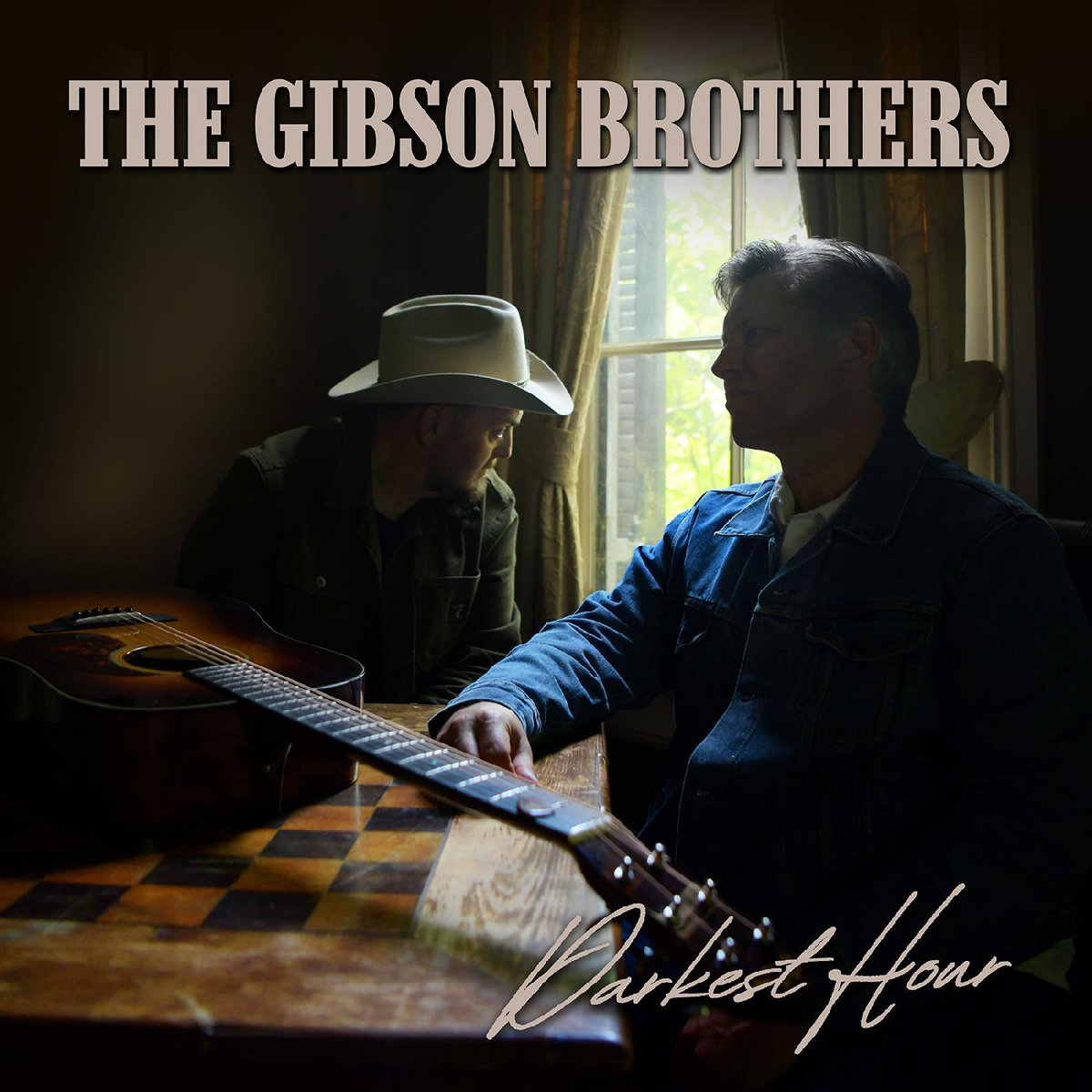
The Gibson Brothers - Darkest Hour
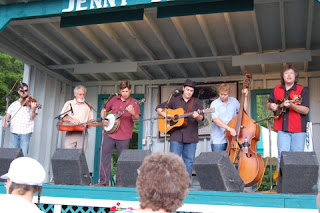
The first time we saw the Gibson Brothers perform, as best we can ascertain, was at the 2005 or 2006 Jenny Brook Bluegrass Festival, then held at the small municipal park in Weston, VT. For this show, they had a six member band, with Junior Barber coming out of retirement for a guest appearance. We were struck by their wonderful melodies, close harmony, sometimes edgy brotherly byplay, and far ranging repertoire, which had always contained many of their own songs. We became instant fans, and their being in the lineup became one of the criteria we applied for choosing which festivals to attend.
Gibson Brothers at Jenny Brook - 2006
As we grew in our understanding and appreciation of bluegrass music, we also became aware that they fit into some special niches. Coming from northernmost New York State, they had grown up on a hardscrabble farm in an almost desolate area quite close to the Canadian border. Yet they had become, at quite young ages, masters of the banjo and guitar, and knowledgeable about the southern rural roots where the music emerged. To it, they brought their own fine song writing and wonderful brother harmonies. As they’ve grown as musicians and individuals, they’ve followed their own unique musical skills into places where many bluegrass musicians never venture, while continuing to develop their own unique sound.
We’ve been listening to the new Gibson Brothers recording “Darkest Hour” for over a month in concert, on CD, and now on an excellent podcast presented by Bluegrass Unlimited and the Bluegrass Hall of Fame & Museum, as well as individual songs used in a variety of interviews. The recording as well as the Gibson Brothers themselves only grow on us with each hearing, whether live or recorded. Always thought provoking, the two brothers have, in this marvelous album, become mature, seasoned performers, The longing for and glorification of two boys growing up on a marginal farm has been replaced by new perspectives showing their maturity as men and as performers as they move into middle age, It’s filled with reflective songs accompanied by their always heart-grabbing harmonies and musical excellence,
Grounded in reflection and based on the rich Gibson Brothers harmonies, The Darkest Hour is built upon their long-time well-recognized musical excellence, and honed clean and pure by Jerry Douglass’ excellent production, featuring some of Nashville’s brightest lights (Euen McGlocklin, Barry Bales, Alison Krauss), the recording shines like a diamond!
Leigh’s song “One Minute of You: A Song for Annie Gray” is a love song from a father to his daughter, filled with the desire a parent feels to cling to every minute of a child’s growth, knowing the letting go is, in the end, necessary. Eric wrote “I Go Driving” to capture the power of driving alone in the country to regain perspective and recapture the lost beauty of the farmland he grew up in, from the perspective of a lost era. The song is simply heart-rending. The Gibson Brothers manage to capture the richness of a lost past without the maudlin sentimentality found in many other contemporary bluegrass songs. Meanwhile, their music continues to be forward looking and optimistic.
Simultaneously a bit darker than their earlier work, their natural effervescence and optimism still shines through - courageous and confident. It’s like reading a novel instead of a book of short stories. The Adirondack songs, written over a period of twenty-five or so years and never collected in a single album, remain grounded in reflection (The Barn Song, Song of Yesterday, Iron and Diamonds, Safe Passage, Railroad Line), yearning for a lost world. The Darkest Hour, chosen from previously never released songs and several of brand new ones, provides a sense of structure as well reflections on living a meaningful life. This newest recording by The Gibson Brothers continues their record of releasing exciting meaningful bluegrass collections.
Thursday, January 12, 2023
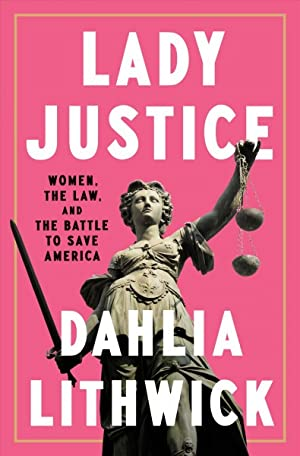
Lady Justice: Women, The Law, and The Battle to Save America by Dahlia Lithwick
Lady Justice: Women, The Law, and the Battle to Save America by Dahlia Lithwick tells the stories of ten women who, through years of developing their legal practices, emerged, mostly, during the Trump administration as heroines for the rights of women and minorities, as well as helping to advance the awareness of men about the dangers of any profession being dominated by them. The book shows these advances through Lithwick’s clear understanding that effective legal practice requires not only tough-minded legal argument, but a strong emphasis on sharp storytelling. Through Lithwick’s clear thinking and penetrating narrative, each of the subjects emerges not only as a game changing attorney, but a woman of courage and persistence.
The book opens with a profile of Pauli Murray, one of the most important and least known pioneers in combining the law and women’s experience in high levels of energy, intelligence, perseverance, and effectiveness. A civil rights activist who earned her law degree at Yale, along with other degrees from first-rate graduate schools across the country, she influenced an entire generation of Black and civil rights attorneys as well as helping mold arguments for the Supreme Court. She later became an Episcopal Priest, influencing that once stodgy denomination.
Other chapters look at a series of attorneys who wove their influence through persistent effort against social reluctance for change in, often, male-dominated law firms where they experienced professional blockages and sexual harassment. They knew, however, they often could not openly resist without possibly (almost certainly) risking their personal advancement in an historically male-dominated profession.
Lithwick tells her own story in a chapter called “#MeToo,” in which she describes when, early in her legal career, she became a clerk for a Federal judge who was, among insiders, notorious for his sexual harassment of woman clerks, all of whom felt constrained from outing the judge because of the negative effect it might have upon their own careers. Most, torn between fighting back and fearing the loss of their own legal careers, chose silence. Lithwick eventually left legal practice to become a legal writer covering the Supreme Court and other issues, as well as hosting an informative and entertaining weekly podcast called “Amicus,” available on many platforms.
Dahlia Lithwick
“Dahlia Lithwick is the senior legal correspondent at Slate and host of Amicus, Slate’s award-winning biweekly podcast about the law. Her work has also appeared in The New York Times, Harper’s, The New Yorker, The Washington Post, The New Republic, and Commentary, among other places. Lithwick won a 2013 National Magazine Award for her columns on the Affordable Care Act. She was inducted into the American Academy of Arts and Sciences in October, 2018.” Penguin, Random House
I found the book to be riveting reading, from a writer who knows that dry academic or legal language doesn’t really do a good job telling stories. Lithwick turns history into the kind of stories that increase understanding while holding onto a reader and simultaneously educting. I purchased the book from Amazon and read it on my Kindle app.